1. The Job
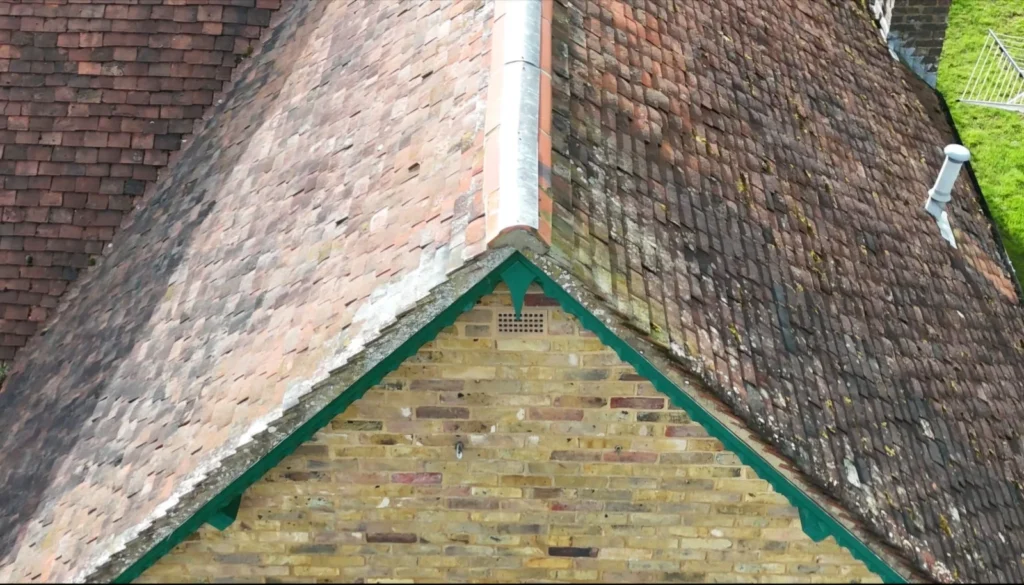
Located in Stow Maries, Essex, this property featured a beautiful but delicate clay peg tile roof. Being north-facing and surrounded by mature trees, it was in the perfect microclimate for organic growth.
2. The Problem
The roof suffered from constant, heavy moss growth. The thick build-up was holding moisture against the delicate tiles, adding unnecessary weight to the roof structure, and causing tiles to degrade and crack during freeze-thaw cycles in winter.
3. What We Set Out To Do
Our goal wasn’t just to clean the roof—anyone can do that. We set out to stop the moss from coming back, protecting the delicate tiles from future damage and saving the homeowner from repeated cleaning costs.
4. The Condition of the Roof
Upon inspection, the damage from the moss was evident. The clay peg tiles were extremely delicate. During the restoration process, we had to carefully source and replace approximately 50 broken or degraded tiles to ensure the roof was watertight before proceeding.
5. The Cleaning Process
Because of the fragile nature of the peg tiles, aggressive pressure washing was out of the question. We used a careful, controlled manual scraping method followed by a soft-wash biocide treatment to kill the remaining spores without damaging the clay.
6. The Copper Ridge System
Once clean and repaired, we installed our Copper Ridge System along the apex of the roof. This involves securing a specially designed, highly pure copper mesh system directly under the ridge tiles, exposing it to the elements.
7. How It Works (In Plain English)
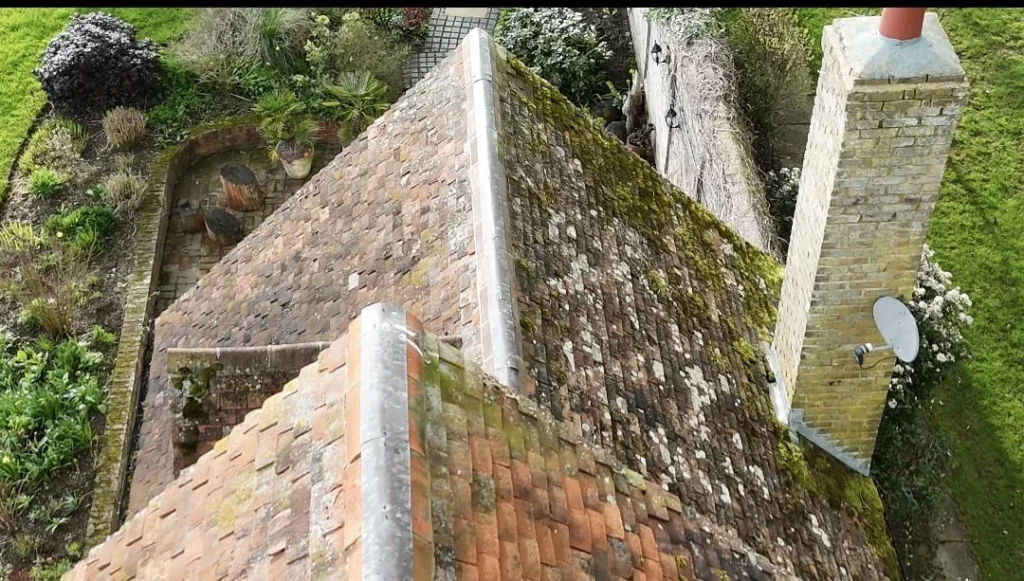
When it rains, the water hits the copper ridge first. The rainwater naturally oxidises the copper, releasing microscopic copper sulfate ions. This copper-infused water then washes down the entire roof. Moss, algae, and lichen cannot survive in the presence of copper sulfate. It acts as a permanent, natural, self-renewing shield.
8. What We Found Years Later
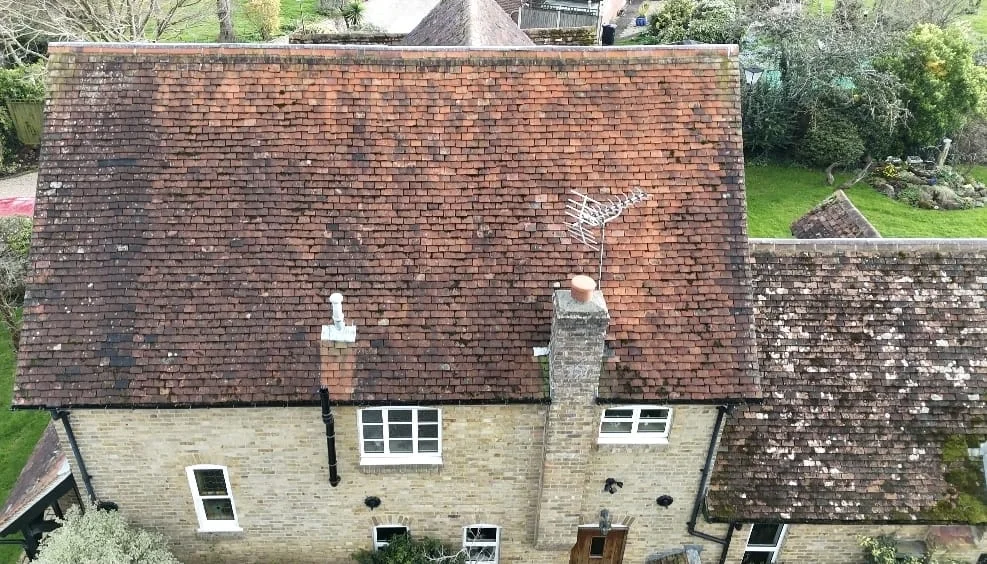
We recently returned to the property to conduct a drone survey. Despite being north-facing and surrounded by trees—prime conditions for moss—the roof remains remarkably clean and structurally sound over a decade later.
9. One Interesting Detail
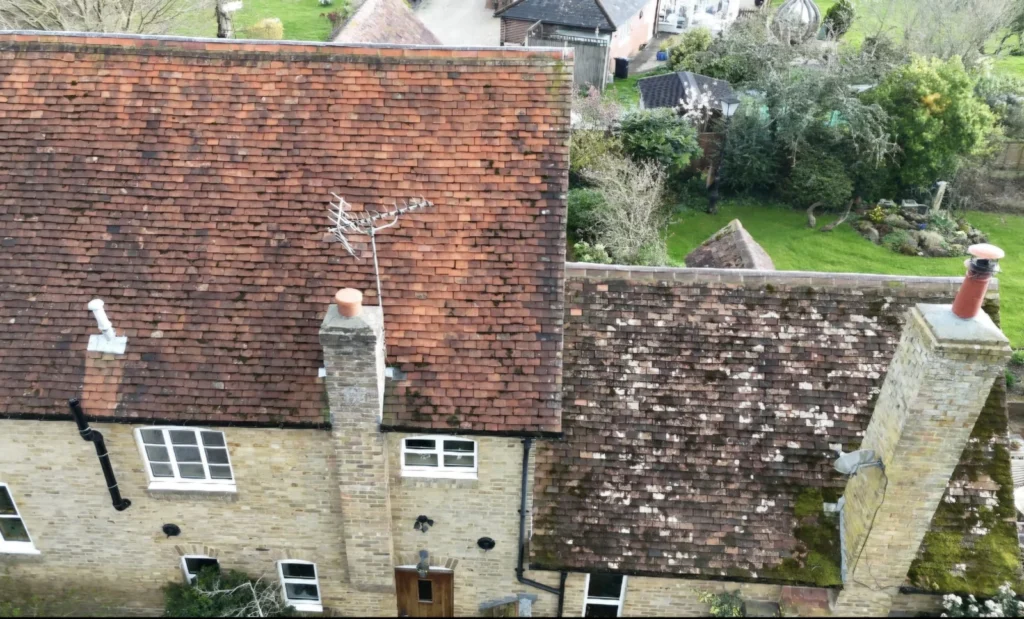
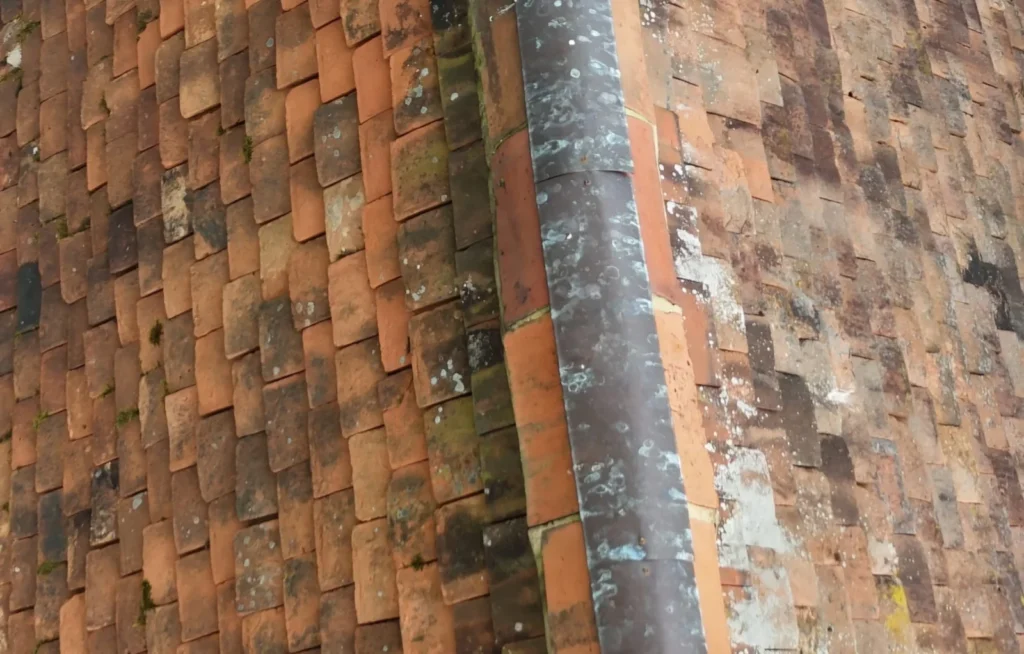
The drone footage revealed something fascinating: small patches of moss had begun to form *only* on the very edges of a few tiles where the copper-infused rainwater couldn’t quite reach due to the overlap. This perfectly demonstrates that where the copper water flows, the moss simply cannot grow.
10. Drone Evidence
Our high-resolution drone documentation provides undeniable proof. The entire main body of the roof, directly in the path of the copper wash, is completely free of the thick moss that plagued it prior to 2013.
11. The Realisation
Seeing this roof over a decade later reinforced our core philosophy. If we had just cleaned it, the homeowner would have paid for another cleaning 3 years later, and another 3 years after that, likely losing more delicate tiles each time.
12. What We Learned
This project cemented our commitment to safe access and careful methods. Working on delicate peg tiles requires patience, the right access equipment (like our spider lifts), and a focus on preservation rather than just high-pressure speed.
13. The Result
13+ years of continuous protection. Zero moss build-up on the main roof body. Zero damage to the delicate clay tiles from organic growth. A roof that looks beautiful and functions perfectly.
14. The Bottom Line
Stop paying for temporary fixes. By choosing to clean, repair, and protect, this homeowner solved their moss problem permanently. Do it once. Do it right.